
So you’ve got a day spare in Stockholm and everyone keeps telling you to get out to the archipelago. Good advice. It’s one of those places that sticks with you long after you’ve flown home.
But for a first-timer, it can feel like a lot. Thousands of islands. A few different ferry companies. Timetables that aren’t always in English. Easy to freeze up before you’ve even started.
So here’s a plain, friendly rundown of how to do the archipelago in a single day without the stress. What it really is, how to get out there, which island to pick, and the small stuff nobody tells you.
Let’s get into it.
First, a sense of scale
Most people don’t realise how big this place is. The Stockholm archipelago has somewhere around 30,000 islands, islets, and bare rocks, scattered from the edge of the city all the way out to the open Baltic. Thirty thousand. Not a typo.
They’re loosely grouped into three bands. The inner islands close to town, green and quick to reach. A middle ring. And the outer islands way out near open water, wilder and a lot quieter.
Most of these islands are car-free. Think red wooden cottages, little jetties, pine trees leaning over the rocks, and not much traffic beyond the odd bicycle. For your first day trip, you want the inner or middle band. That’s where the boats are frequent and the rides are short. And to be honest, it’s plenty pretty out there. You don’t need to travel far to feel like you’ve seen the real thing.
The nature is a big part of the pull. Clear Baltic water, smooth granite you can flop down on, and birdlife just about everywhere. Seals turn up now and then further out, and the whole place goes quiet in the best way once you’re off the main jetties. It’s a proper reset from the city, even though the city is right there behind you.
Getting out to the islands
There’s more than one way to reach the archipelago, and the right one depends on your budget and how much planning you fancy doing. Three main routes. Let me walk you through each.
The public ferries
Waxholmsbolaget is the local ferry company, and it works like a floating bus service. Regular boats, running year-round, used by islanders and tourists alike. They leave mostly from Strömkajen, the waterfront by the Grand Hôtel, and you don’t need to book.
Just turn up and hop on.
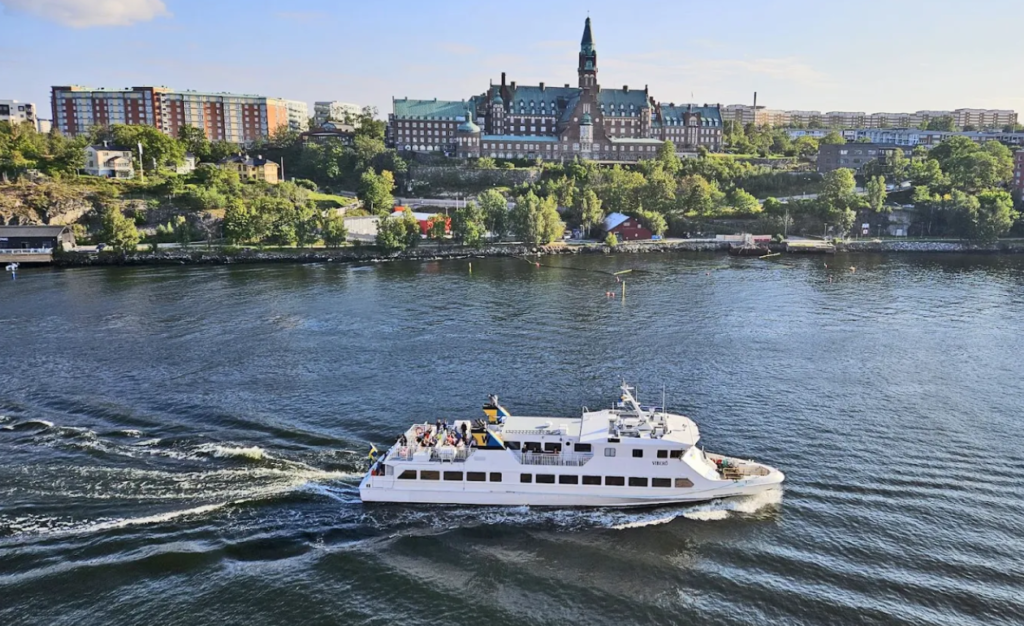
You buy your ticket onboard, and here’s a thing worth knowing. They take card only, no cash. A one-way ride to the nearer islands lands somewhere around 80 to 110 kronor, though fares move about, so double-check before you go. If you’ve already got an SL travel pass, it covers a good chunk of the inner routes too.
One heads-up. The official journey planner is mostly in Swedish, which throws a lot of first-timers. The SL app is easier to work with, or honestly, plain old Google Maps does a decent job of routing the trip for you.
The Cinderella and tourist boats
Strömma runs the “Cinderella” boats, which lean more toward visitors. They leave from Strandvägen, tend to be a touch faster, and reach the popular spots like Vaxholm, Grinda, and Sandhamn. The trade-off is price. They cost more, and you’ll want to book ahead in summer.
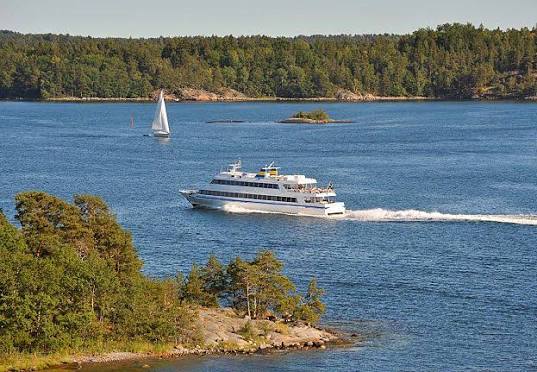
Still, if you value speed and a guaranteed seat over saving a few kronor, they’re a fair call. Especially on a busy weekend when the public boats get packed and the queues build up.
The guided sightseeing cruises
Now this is the easy button, and it’s what I’d point most first-timers toward if you’ve only got a few hours. A guided cruise loops you through the prettiest inner islands and back, usually in two to three hours, with a live guide telling you what you’re looking at. No timetables to crack. No wrong dock to fret over.
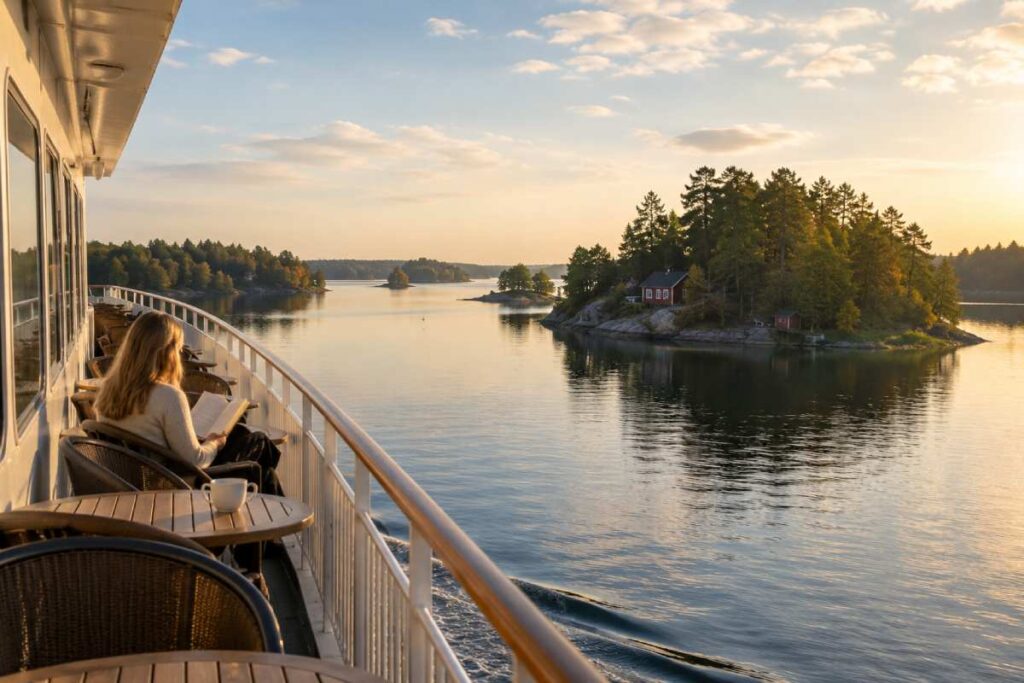
A handful of operators run these out of the city centre. SKS Tours, for one, has two little cruises that both sail about two hours on a classic boat, with an open deck up top and a warm lounge below for when the wind picks up. One comes with proper Swedish fika, coffee and a cinnamon bun while the islands drift past the window. The other swaps the coffee for a local craft beer and a livelier deck. Same lovely route, different mood.
Either way, you get the scenery and the stories without the hassle. A soft landing into the archipelago, basically. Good if it’s your first time and you’d rather someone else did the thinking.
Picking an island for your first trip
If you’d rather set foot on an island and wander around, a few stand out for first-timers. Each has its own character, so it really comes down to the kind of day you’re after.
- Fjäderholmarna. The closest, about 20 to 30 minutes out. Craft studios, small restaurants, easy walking trails, and a proper island feel without the long haul. Great for a relaxed half day.
- Vaxholm. The classic pick, roughly an hour away. A proper little town with wooden villas, a pretty seafront, and a historic fortress on an islet across the water. Fresh shrimp by the harbour is close to mandatory.
- Grinda. Pine forest, swimming rocks, and quiet beaches, around two to three hours out. The one plenty of locals point you to on a warm day.
- Sandhamn. Farther still, out toward the open sea. A sailing town with sandy stretches and a breezier, saltier feel. Best saved for when you’ve got the whole day and the weather’s playing nice.
For a first go, I’d lean toward Fjäderholmarna or Vaxholm. Short rides, loads to see, and you’re back in the city before the day runs out. You can even chain the two together on a good ferry schedule if you’re keen, though that turns a gentle day into a busier one. Don’t feel you have to.
Things to do once you’re on the island
Once you’re on an island, the pace slows right down, and that’s the whole point. Swimming is the classic summer move, straight off the warm rocks into the sea. Loads of the inner islands have easy spots for it, and the water’s cleaner than you’d expect for a big city this close.
Walking is the other easy win. Most islands have marked trails winding through the pines, and you can loop a small one in an hour or so. Bring decent shoes and you’ll stumble onto little coves and quiet viewpoints that the day crowd walks right past.
If you want more, some islands rent kayaks or bikes, and a few have proper wood-fired saunas by the water for the brave.
But you don’t need any of that to have a great day. Half the joy is just mooching about, grabbing a coffee, and watching the boats drift by. No agenda required.
Best time of year to go
Summer is the headline act. June through August brings long days, warm-ish water, and that famous northern light that hangs around till nearly midnight.
The catch is crowds. July especially gets busy on the popular islands, and the harbours fill up with day-trippers early.
If you can swing it, September might be the sweet spot. Still warm enough for a dip, far fewer people about, gorgeous autumn light, and the ferries are all still running their summer routes.
Late spring, around May, is lovely and quiet too. The islands are just waking up, fresh and green, though the water’s still a fair bit cold for a swim.
And don’t write off winter. Fewer boats run, sure, but the ones that do give you a moody, hushed archipelago that most tourists never lay eyes on. Snow on the rocks, steam off your coffee, hardly a soul about. Bundle up properly and it’s magic.
A rough shape for the day
Most day trips follow a simple rhythm. You catch a morning boat out while the light’s still fresh, spend the middle of the day on or around an island, then ride back in the afternoon. No rush, no suitcase to drag along.
If you go the island route, plan around the return ferry. That’s the one thing that catches people out. Boats to the smaller islands can be a couple of hours apart, so check the last departure before you get too comfy on a rock somewhere. Missing it is a long, cold wait.
On a guided cruise it’s even simpler. You’re back at the same dock you left from, right on schedule, with nothing to track. Handy if you’ve got dinner booked in the city that evening and can’t afford to gamble on a timetable.
A quick word on food and fika
Food is half the fun out here, so don’t skip it. Most of the bigger islands have cafés and a restaurant or two, and the classic move is fresh shrimp or a seafood plate right by the water. Simple, local, and it tastes better with a boat bobbing next to you.
Then there’s fika. It’s the Swedish coffee break, and it’s basically a national pastime. Coffee or tea with something sweet, usually a cinnamon bun, taken slow and unhurried. Do it at least once on your trip. On an island bench with the sea in front of you, it’s hard to beat.
One thing to keep in mind. A lot of island cafés and the small breweries run on a seasonal calendar, opening up for summer and shutting again in the off months. So if you’re heading out in spring or autumn, have a quick look at what’s actually open before you bank on lunch there.
Roughly what it’ll cost
The archipelago doesn’t have to burn a hole in your wallet, which is part of why locals love it. A one-way public ferry to a nearby island runs somewhere in the 80 to 110 kronor range, and if you already hold an SL pass, plenty of the inner trips are covered by it. Bring a card, remember, since those boats skip cash.
Guided cruises cost a bit more, usually landing in the region of 300 to 450 kronor for a two-hour trip, sometimes with a coffee or a drink thrown in. Stack a relaxed island lunch on top and you’ve still got a full day out for less than a fancy dinner in town. Prices move with the season, so treat these as a rough guide and check current rates when you book.
Packing and the small stuff
You don’t need much for a day on the water. But a few bits make it a lot comfier, and the sea breeze always feels cooler than it looks from the shore.
- A light jacket or warm layer, even in summer. The decks get windy once you’re moving.
- Sunglasses and sunscreen. Water throws the light straight back at you, and you’ll burn quicker than you think.
- A card for ferry tickets, since the public boats don’t take cash.
- Comfy shoes for island walking, plus a hat depending on the season.
That’s about it. Snacks and drinks are usually sorted onboard or at island cafés, so there’s no need to lug a picnic unless you really want to. Travel light and enjoy the ride.
A few first-timer tips
Book ahead in summer. The good weekend sailings and the tourist boats fill up fast, so a day or two of notice saves you a headache at the dock.
Get there early. Ten or fifteen minutes of buffer gives you time to find the right berth, and the central quays can be a little confusing with several boats loading at once.
Turn up at the last second and you might watch your ferry pull away without you.
And grab a spot on the open deck if the weather’s kind. The views and the photos are always better up top with the wind in your hair, even when the lounge downstairs is cosier. You came for the scenery, so put yourself in front of it.
Making it easy on yourself
A Stockholm archipelago day trip is one of those rare things that’s simple to do and impossible to forget. Sea air, red cottages on grey rock, and water stretching out in every direction you look.
If you’d rather not wrestle with timetables your first time out, a short guided cruise takes the guesswork clean off your plate. Pick the calm fika trip or the livelier craft beer one, show up a few minutes early, and let the crew handle the rest. Either way, you’re in for a proper good day out on some of the prettiest water in northern Europe.

Hi, I’m Robert Engdahl, a travel writer with a passion for helping people discover the very best of Sweden. Through my articles on SKSTours.com, I share practical travel advice, local insights, and destination guides designed to help you experience Sweden beyond the typical tourist attractions.